
Sharp awakening
Black Pepper
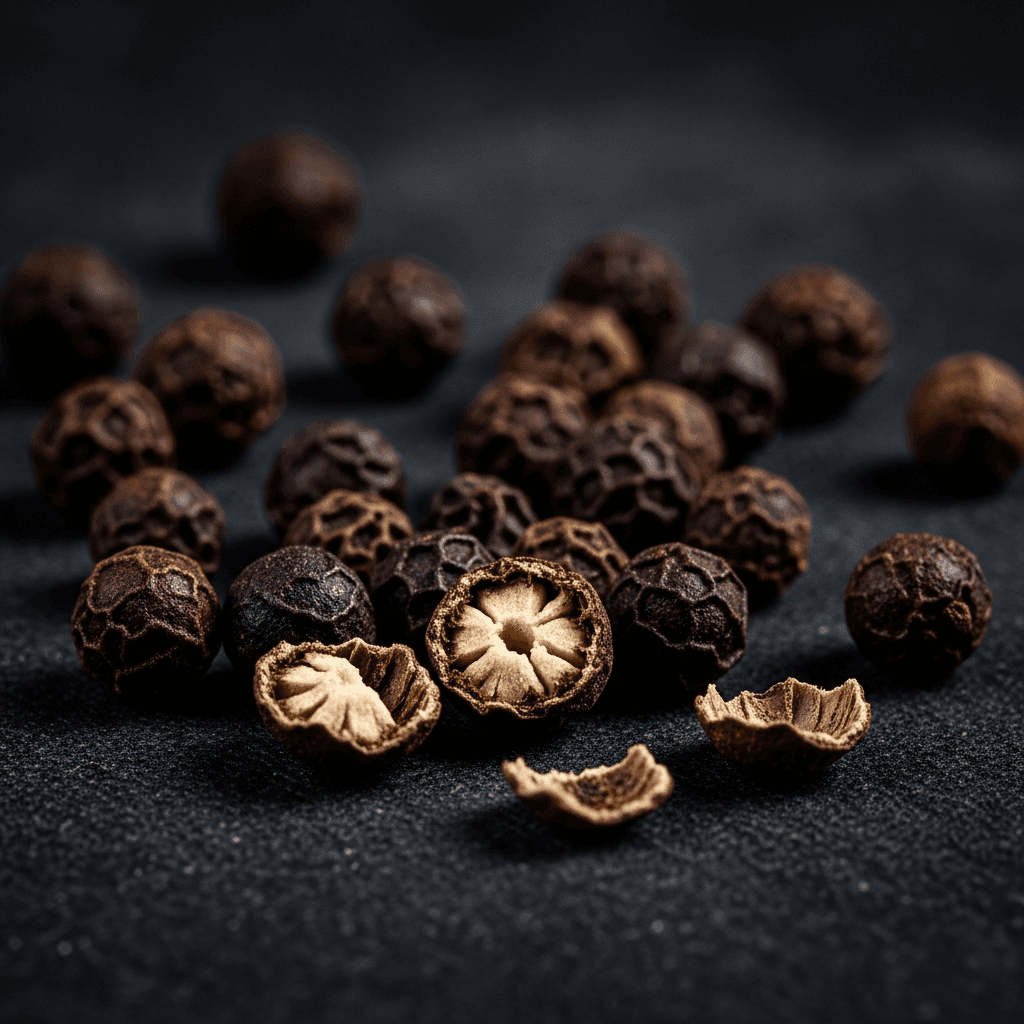
Known as the "King of Spices" in Ayurvedic medicine, black pepper has been used for over 4,000 years to stimulate digestion, improve circulation, and sharpen mental clarity.
The King of Spices
Black pepper is the most traded spice in the world, and it has been for millennia. The Malabar Coast of India, where pepper originates, was known to ancient Roman traders as the source of "black gold." Peppercorns were so valuable that they were used as currency, accepted as payment for rent, taxes, and dowries.
But pepper's value was never purely culinary. In Ayurvedic medicine, black pepper (Piper nigrum) is classified as one of the most important medicinal herbs. It's a key ingredient in Trikatu, a classical Ayurvedic formulation of black pepper, long pepper, and ginger that's been prescribed for thousands of years to stimulate agni (digestive fire) and clear mental fog.
The Aromatic Profile
The sharp, biting scent of black pepper comes primarily from piperine, the alkaloid responsible for its characteristic heat. Unlike capsaicin (the heat in chilli peppers), piperine produces a clean, sharp sensation that's stimulating rather than burning.
Black pepper's essential oil also contains beta-caryophyllene, limonene, and sabinene, which contribute woody, citrusy, and herbaceous undertones. When inhaled, these compounds create a complex sensory experience that's immediately awakening.
Traditional Medicinal Uses
In Ayurvedic tradition, black pepper is considered a sattvic spice, one that promotes clarity and awareness. It's prescribed for respiratory congestion, mental dullness, and sluggish circulation. The concept is straightforward: pepper stimulates. It gets things moving.
Thai traditional medicine uses black pepper in herbal compresses, balms, and inhalers as a circulatory stimulant. The sharp bite of pepper is believed to "wake up" the senses and drive away the heaviness that comes from heat, fatigue, or overindulgence.
In traditional Chinese medicine, black pepper warms the stomach and disperses cold. It's used in formulations for abdominal pain, nausea, and, relevant to BLYSS, nasal congestion and sinus heaviness.
In the BLYSS Blend
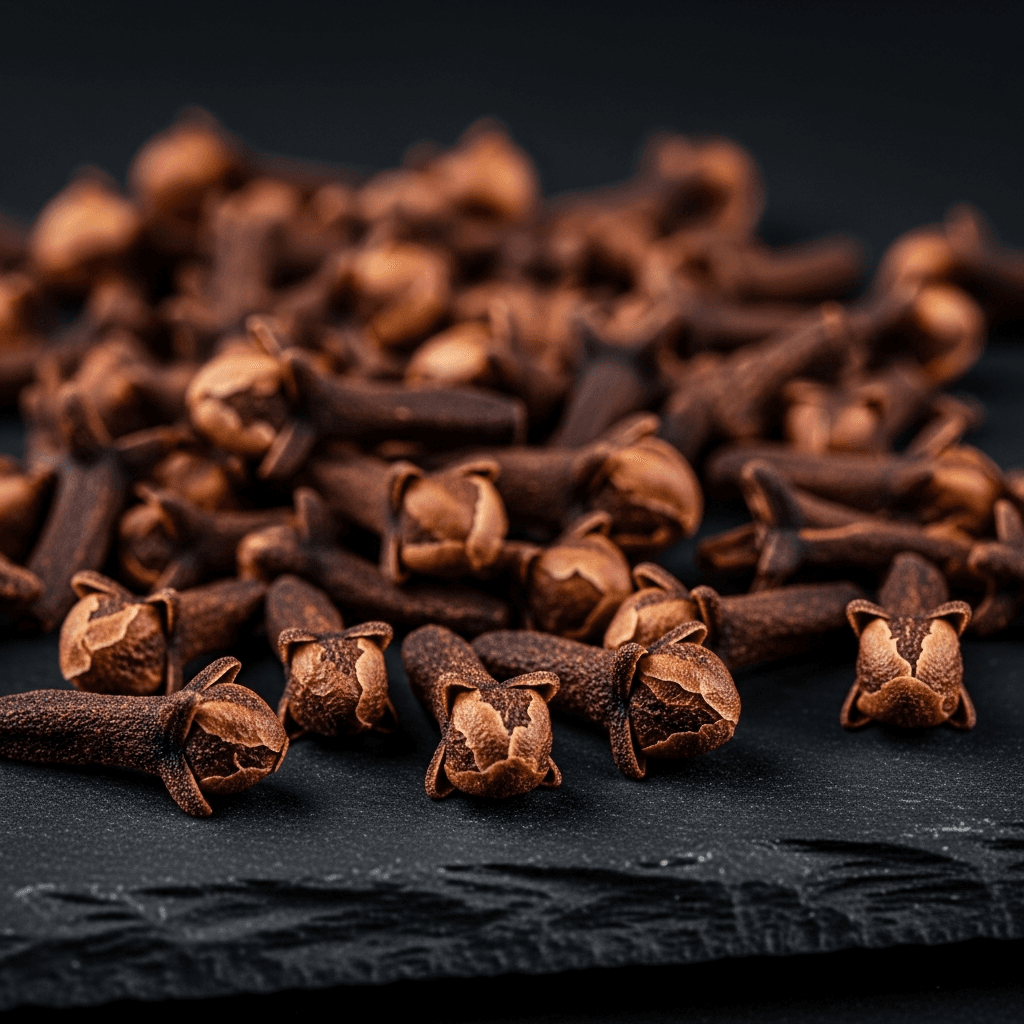
Black pepper is the sharp edge in the BLYSS blend. Where clove provides warmth and menthol provides coolness, black pepper delivers an immediate, direct stimulation, a peppery bite that cuts through fatigue and demands attention.
In the aromatic architecture of BLYSS, pepper works as an accelerant. It intensifies the other ingredients' effects, making the menthol feel sharper, the clove feel warmer, and the eucalyptus feel cleaner. This bioenhancing effect mirrors piperine's well-documented role in traditional medicine, where it's known to amplify the absorption and efficacy of other compounds.
When you inhale BLYSS and feel that momentary sharpness that makes you blink and refocus, that's the black pepper.
Sourcing
The black pepper in BLYSS is sourced from high-quality Vietnamese and Indian peppercorns, selected for their high piperine content and aromatic complexity. The berries are harvested when they begin to redden, then dried to produce the concentrated, pungent spice that forms a core part of the blend.
Try BLYSS
Already in the air.
Word travels first.
Get on the list, or hear about it from someone who is.