
Deep resonance
Star Anise
A foundational herb in traditional Chinese medicine for over 3,000 years, used to ease tension, warm the body, aid digestion, and open the breath.
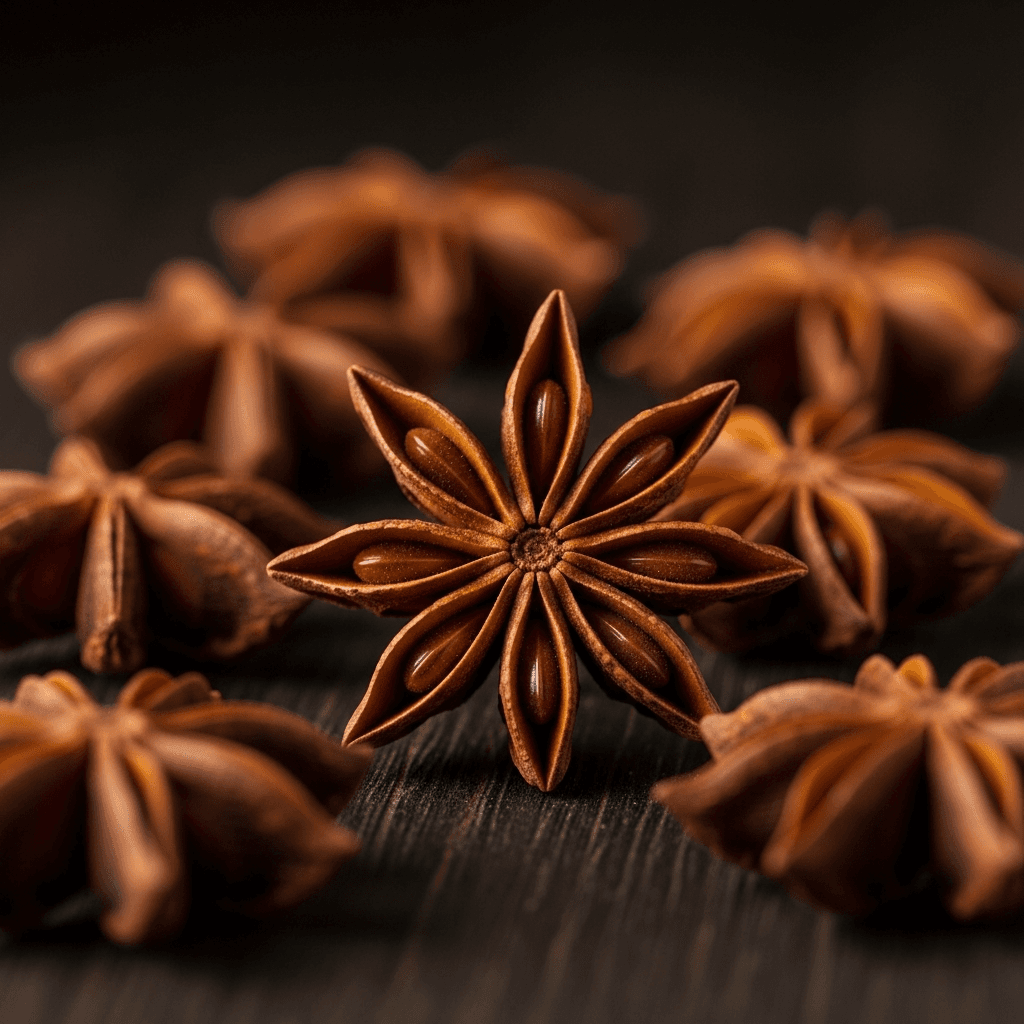
The Eight-Pointed Star
Star anise (Illicium verum) is one of the most visually striking spices in existence. Its perfect eight-pointed star shape has made it a symbol of wholeness and completeness in Chinese culture for millennia. Each point of the star is a carpel containing a single seed, and both the husk and the seed are rich in aromatic oils.
Native to southern China and northern Vietnam, star anise has been cultivated and traded along ancient spice routes for over 3,000 years. It's a foundational ingredient in Chinese five-spice powder and plays a central role in the cuisines and medicines of East and Southeast Asia.
The Aromatic Profile
The scent of star anise is dominated by anethole, the same compound that gives aniseed and fennel their characteristic sweet, liquorice-like aroma. Anethole makes up approximately 80-90% of star anise essential oil, giving it an unmistakable warmth.
But star anise is more than just anethole. It contains linalool (floral, calming), estragole (herbaceous, slightly sweet), and alpha-pinene (fresh, pine-like). This supporting cast gives star anise a depth and complexity that pure aniseed lacks, a resonance that extends beyond the initial sweetness.
Traditional Medicinal Uses
In traditional Chinese medicine, star anise is categorised as a warming herb associated with the liver, kidney, and spleen meridians. It's prescribed to dispel cold, regulate the flow of qi (vital energy), and relieve abdominal pain and distension.
Star anise tea is one of the most common home remedies across China and Vietnam. It's drunk for digestive complaints, respiratory congestion, and general malaise. The warming, sweet nature of the tea is considered comforting and restorative, a way to bring the body back into balance.
In Vietnamese traditional medicine, star anise appears in formulations for respiratory health and mental clarity. Its sweet warmth is believed to open the chest and clear the sinuses, making it a natural companion to more stimulating ingredients like menthol and camphor.
In the BLYSS Blend
Star anise is the grounding note in BLYSS. While menthol and eucalyptus provide sharp, immediate sensations, and pepper and clove deliver heat, star anise provides something deeper, a sweet, warm resonance that sits beneath everything else.
It's the ingredient that makes BLYSS feel complete rather than chaotic. Without star anise, the blend would be all intensity and no depth. With it, there's a warmth that lingers after each inhale, a sweetness that grounds the sharper notes and makes the experience feel rounded and intentional.
Star anise also plays a role in the blend's emotional register. Its warm sweetness triggers associations with comfort, familiarity, and tradition, counterbalancing the energising sharpness of the other ingredients and creating the "grounding" that BLYSS promises.
Sourcing
The star anise in BLYSS is sourced from traditional growing regions in southern China and northern Vietnam, where the Illicium verum trees grow in mountainous, subtropical conditions. The stars are harvested before they ripen fully, when their essential oil content is at its peak, then sun-dried to concentrate their aromatic properties.
Try BLYSS
Already in the air.
Word travels first.
Get on the list, or hear about it from someone who is.