
Ancient calm
Borneol
One of the most revered compounds in traditional Chinese and Southeast Asian medicine for over 1,500 years, used to calm the mind, stimulate alertness, and treat conditions of the head and senses.
The Bridge Between Worlds
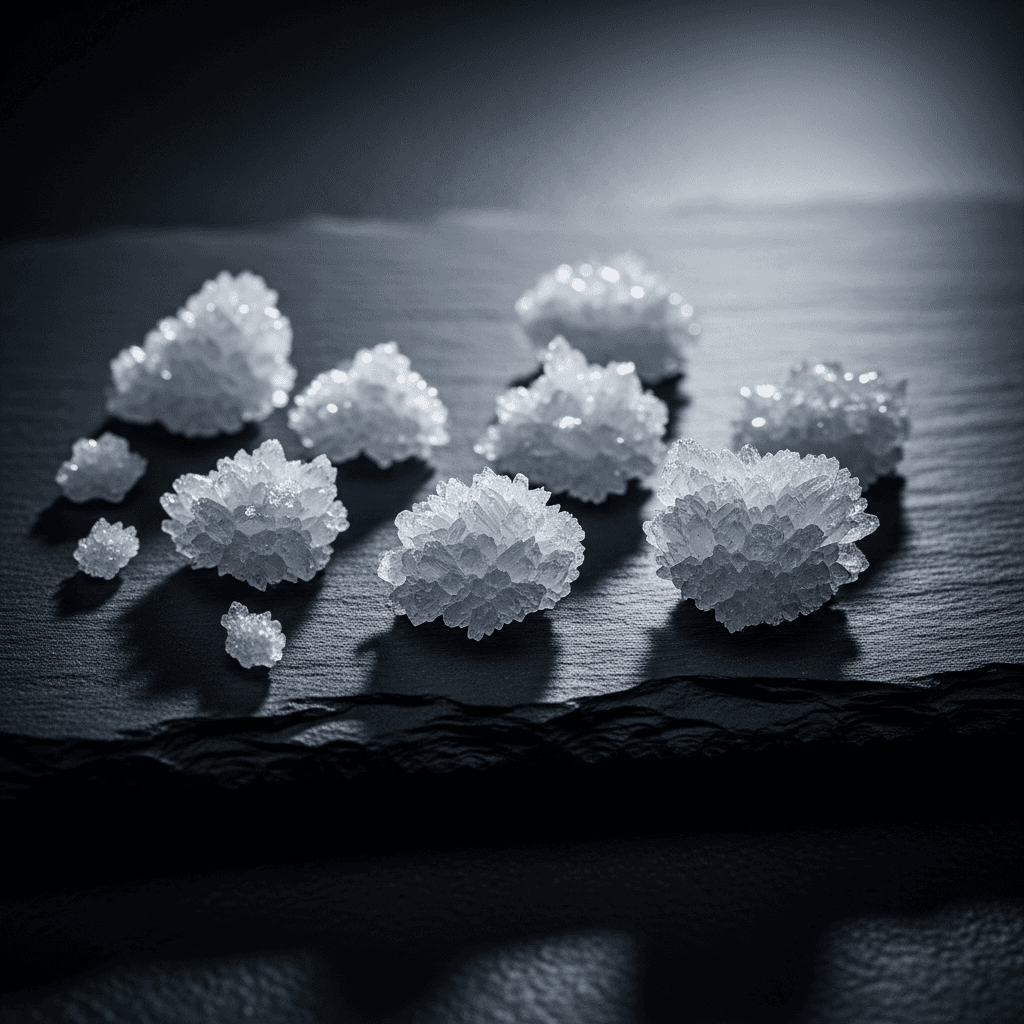
Borneol is the most paradoxical ingredient in the BLYSS blend. It calms the mind while stimulating alertness. It feels cooling yet warming. It's ancient yet barely known in the West. At 9% of the blend, borneol is the ingredient that makes BLYSS feel different from any other inhaler, the bridge between energy and grounding that defines the BLYSS experience.
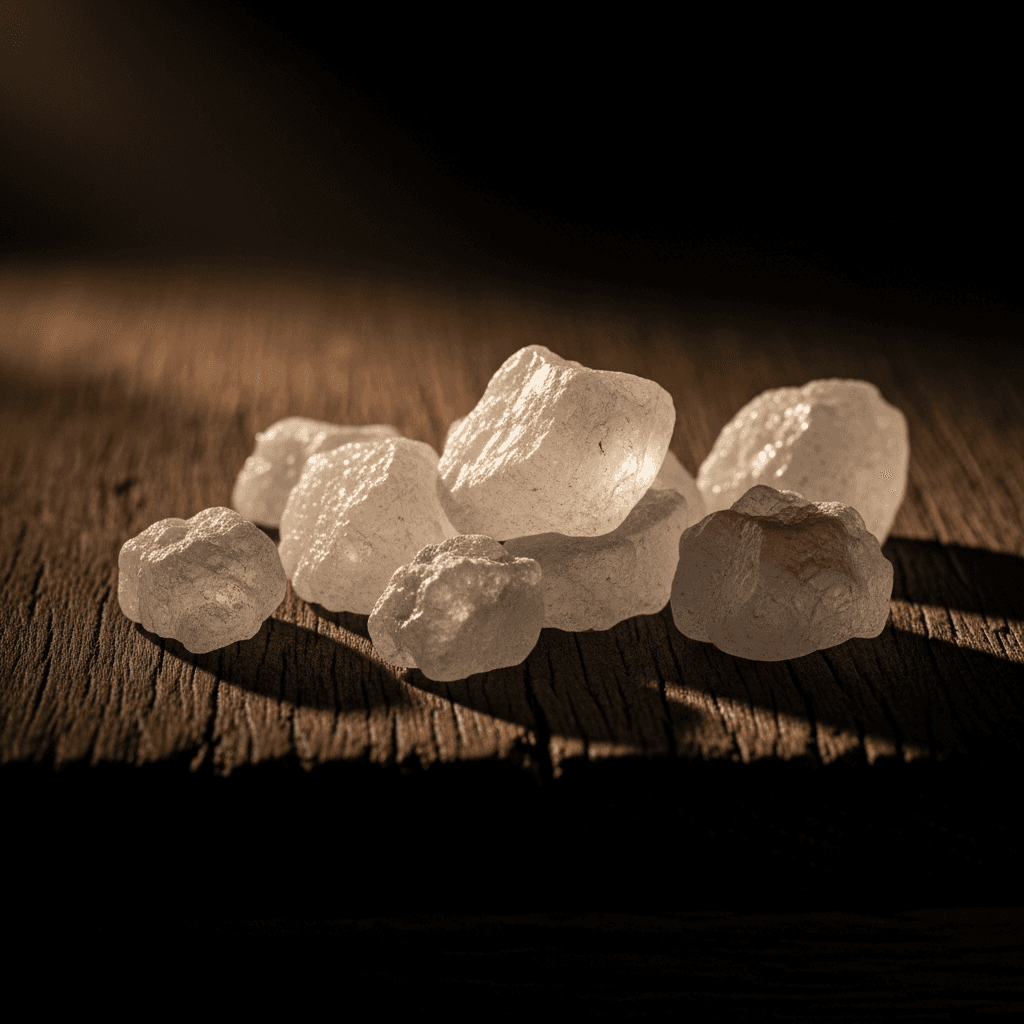
Borneol (C₁₀H₁₈O) is a bicyclic terpene alcohol found naturally in several tree species, most notably Dryobalanops aromatica (the Borneo camphor tree) and Cinnamomum camphora. It's closely related to camphor but with a distinct aromatic character and, traditionally, a much higher status in Asian medicine.
A Compound of Distinction
In ancient China, borneol was known as "dragon brain fragrance" (longnaoxiang), a name that speaks to its revered status. It was far more expensive than camphor and was considered a superior medicinal substance. Chinese pharmacopoeias from the Tang Dynasty (618-907 AD) distinguish carefully between borneol and camphor, assigning borneol to higher-grade formulations.
The distinction matters because borneol and camphor, while chemically similar (borneol is the reduced form of camphor), have subtly different sensory and medicinal properties. Where camphor is warming, penetrating, and aggressive, borneol is cooling, calming, and precise. Both stimulate, but they stimulate differently.
Traditional Medicinal Uses
In traditional Chinese medicine, borneol is classified as a herb that "opens the orifices", meaning it clears the senses, opens the mind, and restores consciousness. It's used in formulations for headaches, sinus congestion, eye irritation, and conditions where the mind feels clouded or sluggish.
One of the most famous TCM formulations containing borneol is An Gong Niu Huang Wan (Calm the Palace Pill with Cattle Gallstone), a classical emergency remedy for stroke and loss of consciousness. Borneol's inclusion speaks to its reputation as a compound that clears the mind and restores alertness.
In Southeast Asian traditional medicine, borneol appears in balms, inhalers, and aromatic preparations. In Thailand, it's a standard ingredient in herbal inhalers, valued for its ability to produce a clear-headed alertness without the jitteriness associated with stronger stimulants.
In the BLYSS Blend
Borneol is the soul of the BLYSS blend, the ingredient that elevates it beyond a simple collection of stimulating aromatics into something that feels genuinely balanced. At 9%, it provides a sensation that's difficult to describe but immediately perceptible: a calm alertness, a grounded energy, a clarity that doesn't come with tension.
This is the duality that borneol brings: it calms without sedating, stimulates without agitating. It's why BLYSS feels appropriate at 2am on a dancefloor and at 7am the morning after. The borneol adapts to the context, when you need energy, it amplifies the stimulating ingredients; when you need grounding, it provides an anchor.
Borneol also acts as a penetration enhancer in the blend, it helps the other aromatic compounds cross the nasal epithelium more effectively, making the entire BLYSS experience more potent and immediate.
Sourcing
The borneol in BLYSS is sourced from Southeast Asian suppliers who extract it from natural tree sources, primarily Dryobalanops aromatica from Indonesia and Malaysia. Natural borneol (d-borneol) is preferred over synthetic alternatives for its purity and traditional provenance.
Try BLYSS
Already in the air.
Word travels first.
Get on the list, or hear about it from someone who is.