
Deep breath
Eucalyptus
Used for centuries by Aboriginal Australians for respiratory healing and wound treatment, eucalyptus became one of the world's most important medicinal plants after European discovery in the 18th century.
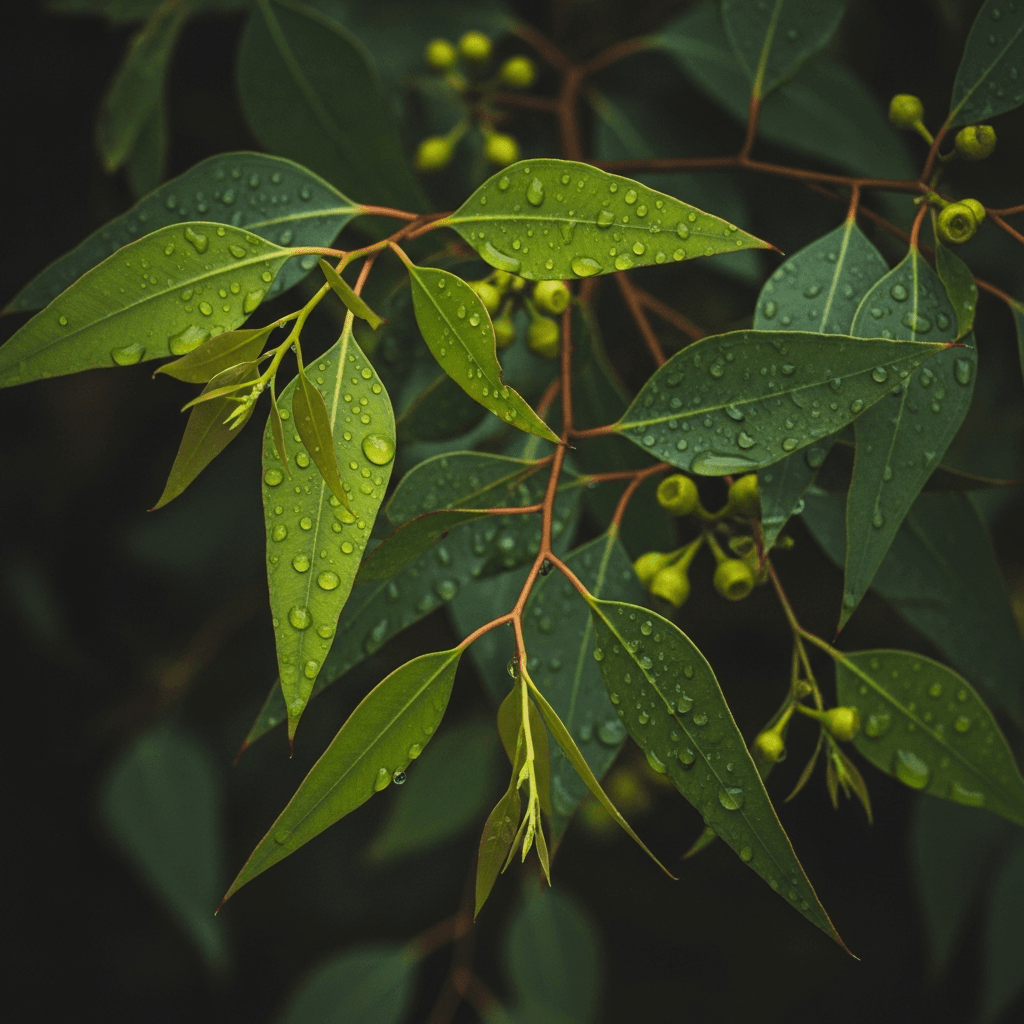
The Great Lung Opener
If menthol is the sharp cooling rush, eucalyptus is the deep, clean breath that follows. At 10% of the BLYSS blend, eucalyptus provides the respiratory depth that makes each inhale feel genuinely expansive, like stepping into a forest clearing after being indoors all day.
Eucalyptus (Eucalyptus globulus and related species) is native to Australia, where Aboriginal peoples have used its leaves as medicine for tens of thousands of years. They burned the leaves and inhaled the smoke for respiratory complaints, applied crushed leaves to wounds, and brewed eucalyptus tea for fevers. When European settlers encountered the plant in the 18th century, they quickly recognised its medicinal value, and eucalyptus oil became one of the first Australian exports.
The Aromatic Profile
The dominant compound in eucalyptus oil is 1,8-cineole (also called eucalyptol), which typically comprises 60-80% of the essential oil. Eucalyptol is a monoterpene oxide with a clean, camphoraceous, slightly sweet scent that's immediately recognisable.
Beyond eucalyptol, eucalyptus oil contains alpha-pinene (pine-fresh), limonene (citrusy), and para-cymene (woody). These minor compounds add depth and prevent eucalyptus from smelling purely medicinal. High-quality eucalyptus oil has a complexity that's often described as "forest-floor", clean, green, and alive.
Traditional Medicinal Uses
In traditional Aboriginal medicine, eucalyptus was used primarily for respiratory conditions, coughs, colds, and breathing difficulties. The practice of "smoking" (creating smoke from burning leaves and sitting in it) was a common healing ritual.
By the 19th century, eucalyptus had become a global medicinal staple. It appeared in cough drops, chest rubs, and inhalation remedies across Europe and the Americas. The compound eucalyptol was isolated and studied, confirming what traditional users had always known: it opens the airways and makes breathing feel easier.
In Southeast Asian traditional medicine, eucalyptus oil became a key ingredient in balms, liniments, and herbal inhalers. Products like Tiger Balm and the entire Thai inhaler tradition incorporate eucalyptus as a core component, valued for its ability to clear the sinuses and promote a feeling of respiratory openness.
In the BLYSS Blend
Eucalyptus is the depth in the BLYSS breathing experience. While menthol provides the immediate surface-level cooling, eucalyptus works deeper, it's the ingredient that makes you feel like you're breathing more fully, more expansively.
At 10%, eucalyptus is calibrated to complement rather than compete with menthol. The two compounds work synergistically: menthol activates the cold receptors in the nasal passages, while eucalyptol provides a sensation of airway expansion that extends the cooling effect deeper into the respiratory experience.
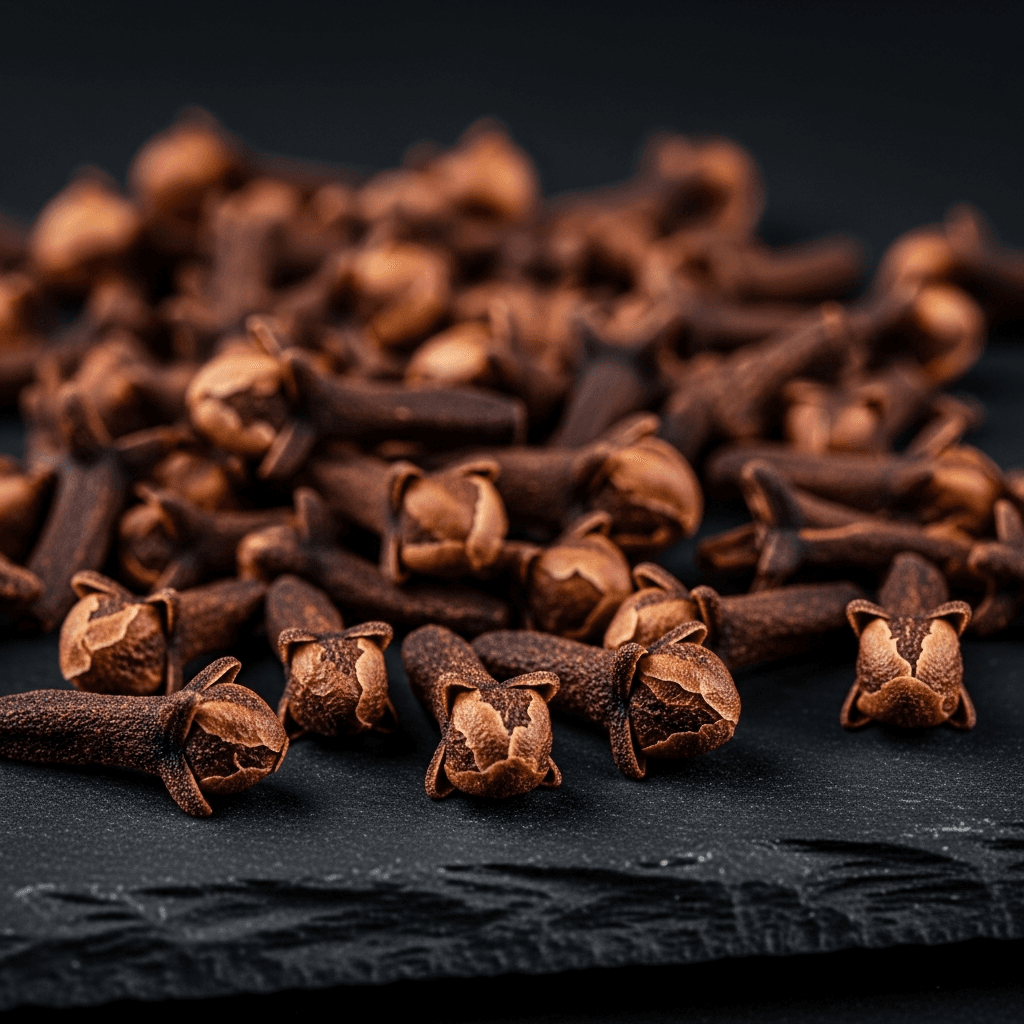
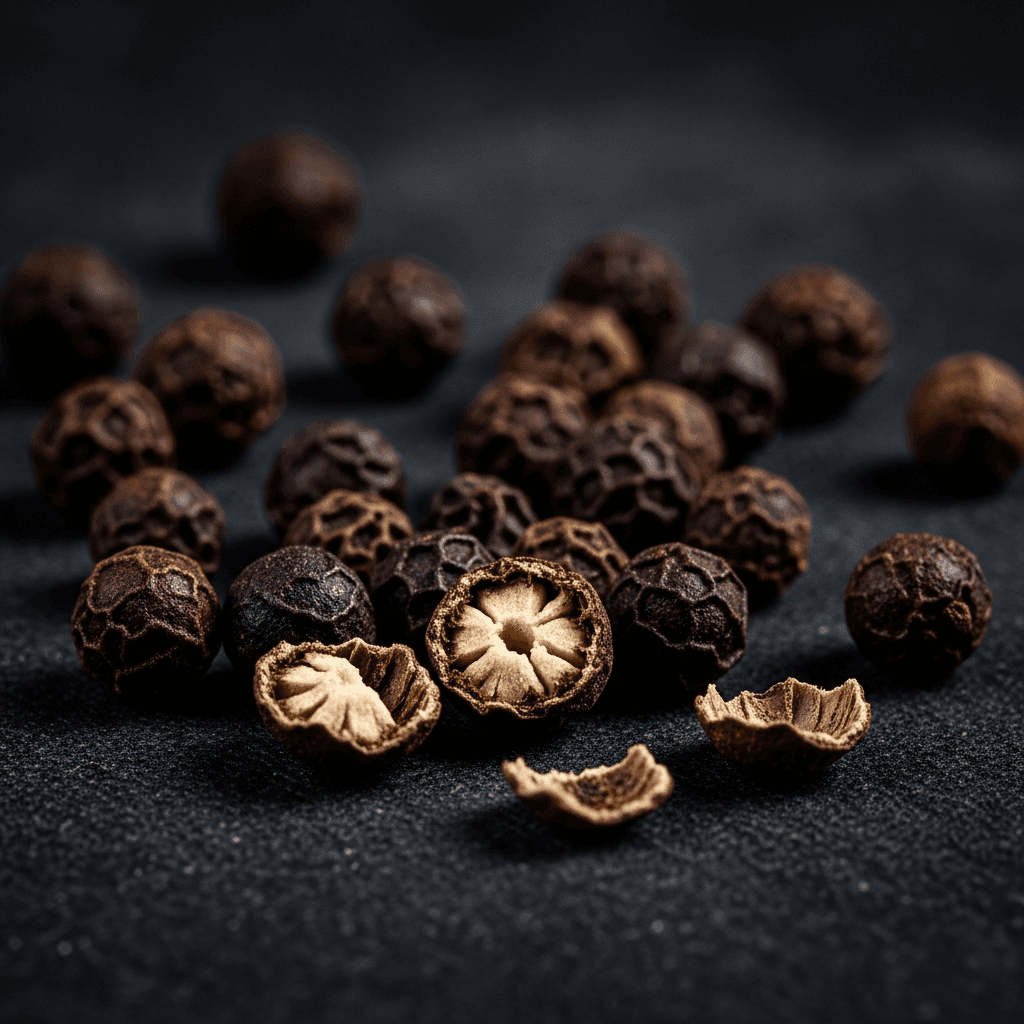
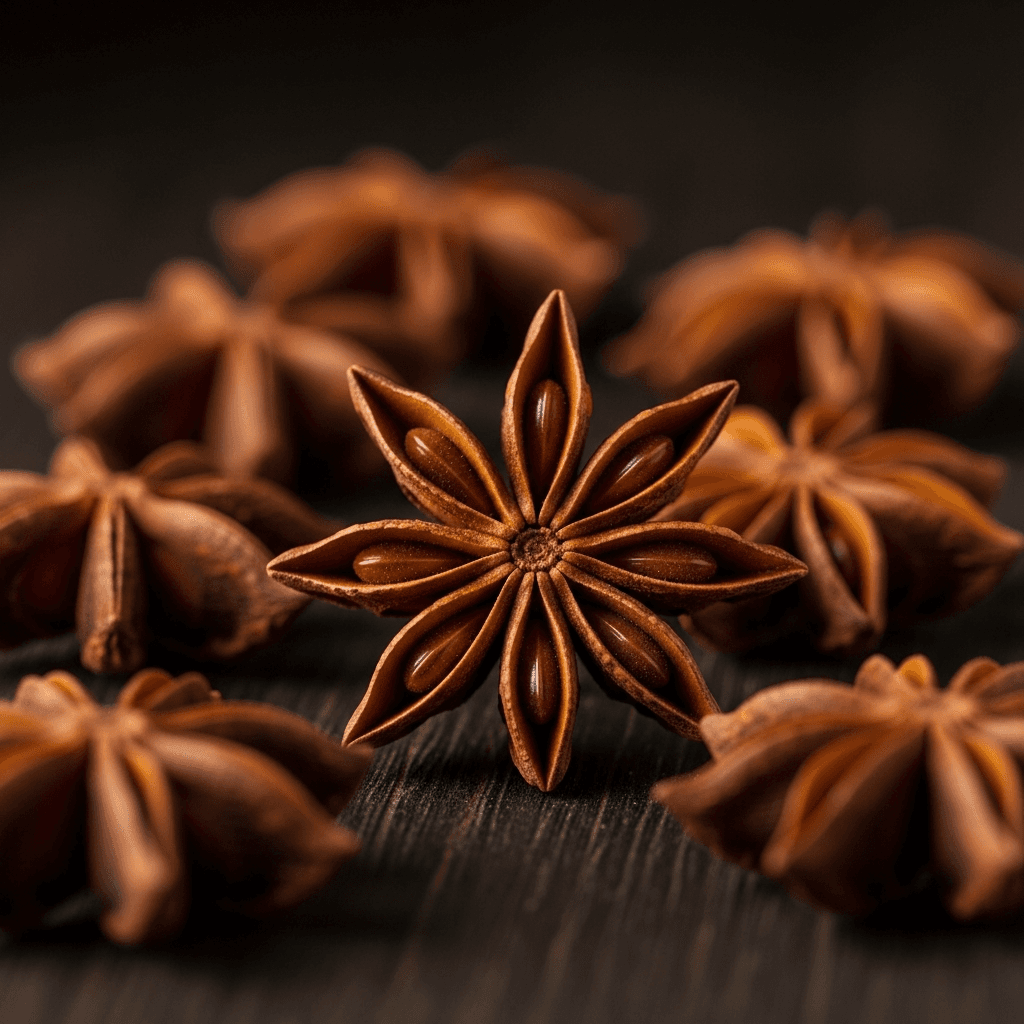
Eucalyptus also contributes the "clean" quality to the BLYSS scent profile. Its forest-floor freshness cuts through the heavier warming spices and prevents the blend from feeling dense or cloying. It's the inhale after the exhale, the renewal that follows the warmth.
Sourcing
The eucalyptus oil in BLYSS is sourced from Eucalyptus globulus cultivated in Australia and southern Europe, selected for its high eucalyptol content and clean aromatic profile.
Try BLYSS
Already in the air.
Word travels first.
Get on the list, or hear about it from someone who is.